The fog on Coronado clung low like a rule the ocean refused to break. She parked the beat-up Civic, listened to the rotor wash and the steady thud of boots on concrete, and walked in wearing jeans, running shoes, and a brown leather jacket that didn’t volunteer a single fact.
“Morning, ma’am. Can I help you?” The petty officer behind the desk had creases you could cut bread with.
Before she could answer, a voice near the coffee pot landed the punchline: “Probably saw a headline about female SEALs and thought she could just show up.”
Then the smirk, the throwaway line with extra sugar: “You lost, little girl?”
She could have said a lot. That the ocean doesn’t negotiate. That attention is a better survival skill than ego.
That some of the best operators she ever knew told fewer stories than a blank page.
Instead she handed over the authorization letter Captain Holloway had signed and waited while a lieutenant commander read it like it was a parking ticket.
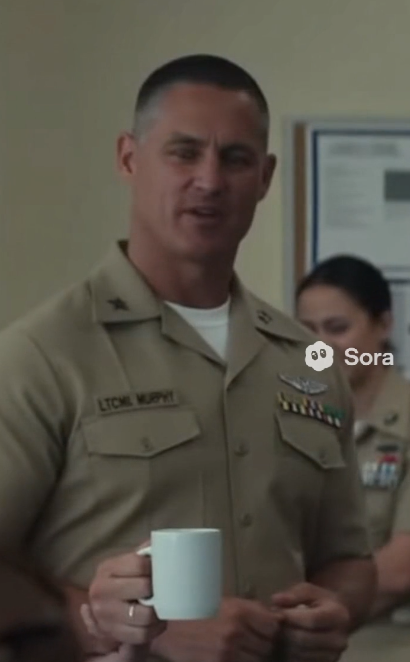
He gestured toward the door—polite, firm, wrong.
She thought of a night years ago, a Chinook, six silhouettes, and a village that would wake up because foam earplugs don’t stop courage.
She kept her voice level. “Commander Patterson’s expecting me.”
A shrug. A phone reaching for another phone. Two admin staff chuckled in the corner, the kind of laughter that looks brave until it meets a fact.
She turned to leave. The morning light caught the worn edge of her jacket.
Leather shifted. For a breath and a half, the interior lining flashed: an eagle clutching a trident, an anchor, and a pistol.
Not a souvenir. Not a replica. The gold that says you carried weight and didn’t drop it when it mattered.
The petty officer’s manifest slid out of his hands. The room changed temperature.
Somewhere a secure door hissed shut. And as every casual assumption in that office tried to sit back down…
The lieutenant commander cleared his throat, but his voice betrayed the same fracture in confidence. “Ma’am… forgive the delay. I’ll—ah—contact Commander Patterson right away.”
She didn’t answer. She didn’t need to. The trident had already done the talking.
The secure door slid open, and a tall man in khakis stepped through, silver hair cropped close, a presence that moved air without needing words. Commander Patterson.
His eyes scanned the room, caught the trident flash before her jacket settled again, and his expression flickered—not surprise, not disbelief, but recognition.
He had seen the reports, the debriefs, the citations written in bureaucratic ink that never captured the dirt and the blood.
“Lieutenant Commander Rivers,” Patterson said evenly, ignoring the frozen staff. “With me.”
She followed without a glance back. The corridor beyond smelled of saltwater and gun oil, lined with photos of graduates who had made it through Hell Week and beyond.
Men grinning, some looking half-dead, all immortalized for surviving what most wouldn’t attempt. Her own photo wasn’t there. Her class had been different. Classified.
She shrugged. “That’s the point.”
He smiled faintly, the kind of smile that belonged to someone who had buried too many secrets to waste time with disbelief. “You ready for this?”
Her jaw tightened. “If I wasn’t, I wouldn’t be here.”
A compound buried deep in a desert canyon. Photos of men with eyes that had nothing human left in them.
And at the bottom, one face circled in red: a ghost from a past op, someone she had left behind in the dust and fire of another night. She had thought he was dead. Apparently, he wasn’t.
Her throat stayed steady, but inside, the past cracked open. That night in Syria—the chaos, the firefight, the extraction that nearly didn’t happen.
She remembered dragging two teammates across a roof under fire, remembered the explosion that split the village square.
And she remembered a shadow in the flames—his shadow. She had buried it with the rest of her ghosts. But now here he was, alive, and dangerous.
Patterson’s voice cut through. “Intel says he’s training foreign fighters. They call him the Jackal now. Your orders are simple: locate, confirm, and remove the threat.”
She closed the folder. Her hands didn’t shake. “When do we leave?”
That night, the beat-up Civic was gone, replaced by a blacked-out Suburban that slipped through Coronado’s gates without fanfare.
She rode in the back, dressed in gear that didn’t exist on paper, her trident hidden again but its weight pressing against her ribs like a promise.
The team waiting for her wasn’t made of rookies. They were men who had heard whispers about her but never seen proof. Silent nods, measured glances.
No jokes this time. They moved with the efficiency of those who had bled for the same flag, even if trust hadn’t been earned yet.
The flight out was long, silent except for the drone of engines and the occasional click of gear checks.
She sat with her eyes closed, not sleeping, just letting the rhythm of the aircraft steady her pulse. In the darkness behind her eyelids, she saw the Jackal’s face.
She remembered his laughter when things burned. She remembered the last words he had shouted across the smoke: Next time, it’s you.
Hours later, they crested a ridge. Below lay the compound—floodlights, guards, the faint echo of generators.
She raised her scope, adjusted focus, and froze. There he was. The Jackal. Alive. Breathing. Smiling like he’d been waiting for her all along.
Her breath steadied. The ocean doesn’t negotiate. Neither did she.
They waited until the guards changed shifts. Silent signals passed hand to hand.
They moved like shadows breaking into darker shadows, scaling walls, cutting wires, silencing patrols before throats could make noise. Every motion was familiar, muscle memory sharpened by years in the dark.
She slipped inside, found cages, faces hollowed by hunger and fear. She whispered for silence, cut locks, guided trembling hands out into the night. Some wanted to cry. She told them later. Survival first.
But then—too late. An alarm cracked the night open. Floodlights blazed. Gunfire erupted.
The Jackal stepped into the chaos, weapon in hand, smile razor-sharp. Their eyes met across the courtyard.
“You should have stayed dead,” he shouted over the gunfire.
“Ladies first,” she answered, her voice calm as she raised her rifle.
The firefight swallowed everything. Bullets shattered stone, grenades tore holes in the ground.
Her team fought like wolves, pulling prisoners out, covering each other’s flanks. She moved through it all with precision, every shot a statement, every step a promise.
And then it was just the two of them. The Jackal retreated into the main building, drawing her in.
She followed, kicking through splintered doors, climbing shattered stairs. The roof again. It always came back to rooftops.
He was waiting, knife in hand, eyes wild. “They’ll never let you be one of them,” he sneered. “You’ll always be the girl they mock.”
She didn’t answer. She didn’t waste words. The fight was brutal, close, no room for hesitation.
Steel against steel, fists, elbows, the taste of blood. He was strong, but desperation is a clumsy weapon. She fought with something sharper.
In the end, her blade found its mark. His eyes went wide, the sneer collapsing into silence. He fell against the parapet, choking on disbelief, before darkness claimed him for good.
She stood over him, chest heaving, bloodied but unbroken. Below, the compound burned, but her team’s extraction bird was inbound. Prisoners were safe. The mission was done.
She looked at the body one last time. “Not so little now.”
When she walked back into the night, the trident under her jacket caught the faint light of the flames. The men who had doubted her didn’t speak.
They didn’t need to. Respect doesn’t always come in words. Sometimes it comes in silence, carved into the memory of those who saw what you carried—and knew you never dropped it.
And as the rotors lifted them out of the canyon, carrying ghosts and victories alike, she finally let her breath out. The ocean doesn’t negotiate. Neither did she.