The Haunting Discovery: What Experts Found in an 1878 Family Photo That Left Them Speechless
In a world where history often hides its secrets in plain sight, a recent discovery has sent chills down the spines of researchers and historians alike.
An 1878 photograph of the Swan family, taken at a remote log cabin in Flat Creek Ridge, Oregon, has emerged, revealing more than just a glimpse into the past.
What began as a routine examination of historical imagery quickly turned into a spine-tingling investigation that raised unsettling questions about the family’s history and the eerie presence captured in the photo.
The Discovery: A Glimpse into the Past
The photograph, labeled “Swan Family. June 1878,” features seven individuals posed in front of their log cabin. Two armed men stand guard, while a man is positioned behind two women and a child.
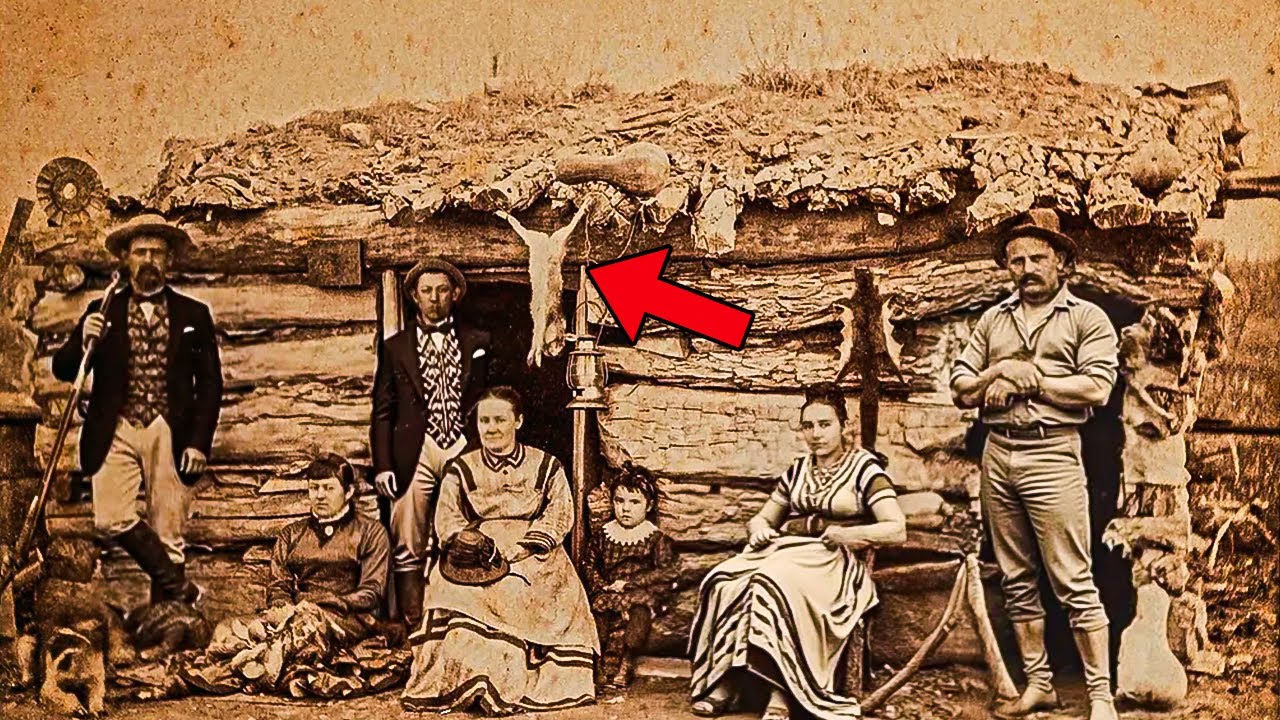
A woman is seated on the ground, creating a seemingly ordinary family portrait. However, the scene takes a dark turn when Devon, a university researcher, decided to zoom in on the image, drawn by a peculiar detail above the cabin door.
As he focused in on the area, Devon’s heart raced when he spotted a rabbit-like figure hanging by its feet, directly above the young girl’s head. This bizarre anomaly raised immediate concerns.
What was this figure doing there? Was it merely an odd coincidence, or did it signify something more sinister lurking within the family’s history?
A Closer Examination: The Role of Technology
Intrigued by the unsettling discovery, Professor Alana Mercer, a leading expert in photographic analysis, took an interest in the case. She marked the image for enhancement, eager to uncover the truth behind the mysterious figure.
Utilizing advanced imaging technology, the team worked meticulously to clarify the details of the photograph. As the image was enhanced, what they found next made them turn pale in disbelief.
The closer examination revealed more than just the rabbit-like figure. Shadows and outlines began to emerge in the background, suggesting the presence of additional figures that were not initially visible.
The atmosphere of the photograph shifted dramatically, transforming it from a simple family portrait into a chilling snapshot that hinted at deeper, darker stories hidden within the cabin’s walls.
Theories and Speculations: What Could It Mean?
As news of the discovery spread, theories began to circulate about the significance of the rabbit-like figure and the shadows that accompanied it.
Some historians speculated that the figure could represent a local folklore or superstition prevalent in the late 19th century. Others suggested that it might be a symbol of sacrifice or a ritualistic practice, pointing to a time when such beliefs were commonplace in rural communities.
The unsettling nature of the photograph also sparked discussions about the Swan family’s history. Who were they? What struggles did they face living in isolation in the Oregon wilderness?
The possibility of hidden narratives—tales of hardship, survival, and perhaps even tragedy—began to emerge, prompting researchers to delve deeper into the Swan family’s lineage.
The Historical Context: Life in 19th Century Oregon
To fully understand the implications of the photograph, it is essential to consider the historical context of 19th century Oregon.
During this period, many families ventured into the rugged landscapes of the West, seeking opportunities for a better life. However, the harsh realities of frontier life often led to isolation, conflict, and hardship.
The Swan family, like many others, likely faced numerous challenges, including the threat of wildlife, harsh weather conditions, and the ever-present struggle for survival.
The eerie figure in their photograph could serve as a haunting reminder of the fears and dangers that loomed over families living in such precarious situations.
The Impact of the Discovery: A New Chapter in Historical Research
The revelation of the rabbit-like figure and the accompanying shadows has opened a new chapter in historical research.
Scholars and enthusiasts alike are now drawn to the story of the Swan family, eager to learn more about their lives and the circumstances that led to the chilling photograph.
This discovery has not only sparked interest in the family’s history but has also highlighted the importance of examining historical artifacts with a critical eye.
As the investigation continues, researchers are collaborating to piece together the puzzle of the Swan family and their log cabin. Archival records, local histories, and oral traditions may provide valuable insights into their lives, helping to unravel the mysteries that have long been buried.
Conclusion: The Unseen Stories of Our Past
The haunting discovery of the rabbit-like figure in the 1878 photograph of the Swan family serves as a powerful reminder that history often contains layers of meaning waiting to be uncovered. Each artifact, each image, tells a story that can illuminate our understanding of the past.
As researchers continue to explore the significance of this photograph, they not only seek to understand the Swan family’s experiences but also to connect with the broader narrative of life in 19th century America.
The chilling details captured in this moment in time encourage us to reflect on the unseen stories that shape our history and the enduring impact of those who came before us.
In a world filled with mysteries, the Swan family’s photograph stands astestament to the power of curiosity and the relentless pursuit of truth. As we delve deeper into the past, we uncover not only the lives of those who lived long ago but also the timeless human experiences that continue to resonate today.